“Try keeping a diary” and “Journalling really helps!” are common phrases in response to many of modern life’s problems. Some people are able to quickly embrace this idea and take to it almost naturally. Others experiment with journaling, but soon give up the effort when they find themselves still plagued by their original discontent, as well as with the added issue of frustration. Perhaps an exploration of the possibilities within the activity of journaling may help generate some fruitful ideas, if you happen to find yourself in that latter category.
PURPOSE
What can sometimes sabotage any pursuit is a failure to first thoroughly consider its purpose. If we don’t have a solid grasp on why we are doing something—specifically, as well as generally—we can end up not valuing it as much as we should. Start with the following questions as a guide, and add any other questions you feel might apply more particularly to you and your unique needs.
- What is the primary goal of your journaling?
- To serve as a current and temporary outlet for frustration?
- To provide a record of daily events for future reference?
- To work out your own thoughts, opinions, and feelings on controversial subjects, or on what has been going on in your life?
- To free up “brain space” by getting some of the thoughts out of your head and safely preserved on paper to be analyzed at a later date?
- To force yourself to be actively conscious of something (e.g., gratitude)
- To be any combination of the above possibilities? Or something else entirely?
- Will this account be only for your eyes? Or will it be passed down to your loved ones later on?
STYLE
There is no limit to the ways and words you can use to put thought to paper. This is perhaps the most personal and individual aspect of journaling, as it is the most direct, accurate insight into its creator.
- What writing style will this journaling take?
- Formal or informal?
- “Dear Diary” style?
- An objective log of events and interactions? Lists?
- Short-story, narrative style?
- Is there a particular tone you want the writing to take? (Humorous, blunt, vividly descriptive, etc.)
FREQUENCY
If treated too strictly, the subject of frequency could be the number-one cause of perceived failure when it comes to journaling. While it is good to mindfully make an effort to be consistent, unrealistic expectations can lead people to abandon the effort altogether, making it seem like an unachievable habit.
- How frequently do you want to journal?
- Do you want to spend time journaling daily? Weekly? Monthly? Whenever something arises that causes you to want to write about it?
- What frequency is realistic and achievable, taking into account the demands already on your time and attention?
- How high of a priority do you want to make journaling?
LOGISTICS
Don’t neglect the more practical aspects of journaling. Answering some of these questions before you start can help ensure it becomes a successful, productive activity.
- Where/When do you want to journal?
- Do you want to carry your journal with you, ready whenever you are ready to write?
- What setting would make journaling easiest? Outdoors? A coffee shop? Your office? A cozy corner of your home?
- What time of day will you most likely want to journal?
- What time of day will you most likely be able to journal?
- What time of day lends itself best to the kind of writing you want to do? (E.g., would gratitude journalling be most effective in the morning, to get your day off to a positive start? Or at night, to the effect of counting your blessings instead of sheep?)
SENSES
Lastly, find an approach to making journaling a truly enjoyable experience that you look forward to and can spend quality time engaged in.
- What kind of sensory experience do you want from your journaling?
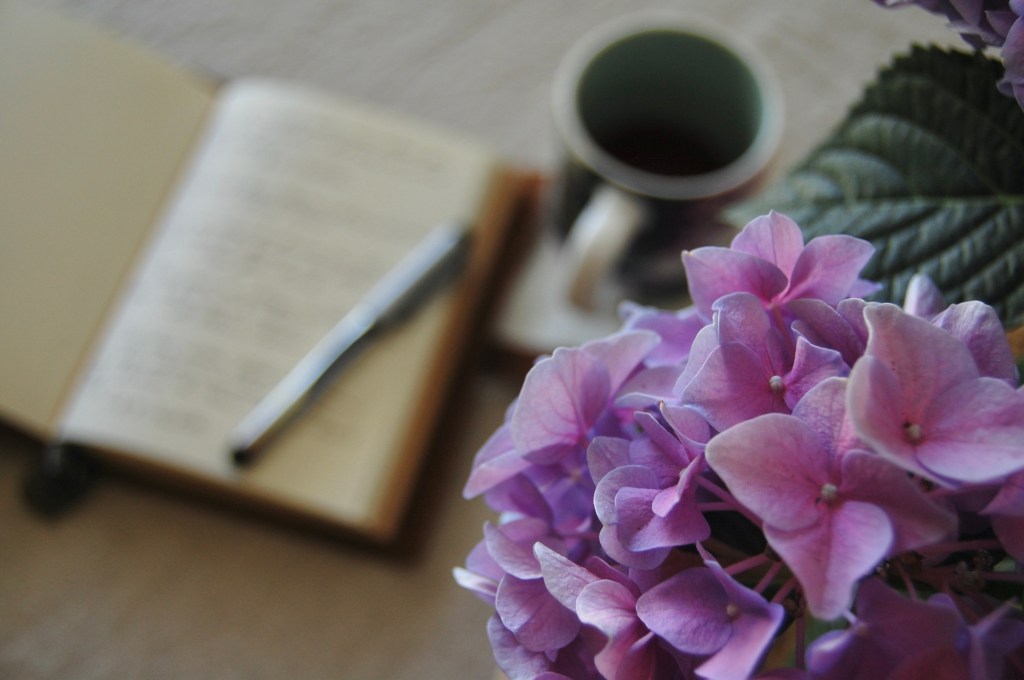
- Is your journal tech-forward (e.g., notes on your phone, emails, documents on a drive) or more tangible (e.g., paper and pen)?
- What material should your journal be made of? Leather? Cloth?
- Are the pages blank or lined? Glossy or matte?
- Will you include art in your journal, either your own or someone else’s? Why?
Take your time answering these questions, and feel free to tweak your approach if you find it’s not working as well as it could.
 The Intentional Ordinary